
2026 Data Analysis · All 20 Italian Regions · Food Lovers
Top 5 Italian Regions for Food Lovers
We scored every Italian region across five food metrics. These are the clear winners — and exactly what makes each one extraordinary for serious food lovers relocating to Italy.
Italy is a food civilisation, not just a food destination. But not all 20 regions are equal — and if you are planning to relocate for the food culture, choosing the right region is as important as choosing the right house.
We analysed our full dataset across all 20 Italian regions, weighting five distinct metrics that matter most to serious food lovers: food scene strength, dining value, walkability to food experiences, town livability and authenticity.
These five regions are not just great for a holiday. They are the places where food is not an attraction but a structure of daily life — where the Tuesday market, the agriturismo, the wine route and the sagra are genuinely woven into the way people live.
Start here
Food is only one part of the move
Use the lifestyle quiz to match food culture with climate, budget, healthcare, transport and the pace of life you actually want.
Quick answers
What to Know First
Best overall
Emilia-Romagna ranks first for protected products, pasta culture, restaurant depth and everyday food infrastructure.
Best value
Campania delivers the strongest cost-to-quality ratio, especially for pizza, seafood, produce and street food.
Best premium dining
Piedmont is strongest for truffles, Barolo, serious seasonal cooking and elegant city-country food culture.
Best next step
Compare food towns in the Town Explorer, then read the full regional guide before choosing a base.
The framework
How We Scored the Regions
Every region was evaluated across five weighted metrics drawn from our full dataset. Each metric reflects a real dimension of daily food life — not tourist experience, but resident experience.
1. Food Scene Strength
Density of quality trattorias, agriturismi and local markets, plus the depth of DOP and IGP protected specialties.
2. Dining Value
The cost-to-quality ratio across everyday eating, street food, trattorias, producer dining and destination restaurants.
3. Walkability to Food
How easily residents can reach fresh markets, food streets, wine routes, seasonal sagre and producer experiences.
4. Town Livability
Healthcare, transport, services, housing options and whether the food lifestyle works year-round.
The ranked shortlist
The Top 5 Foodie Regions
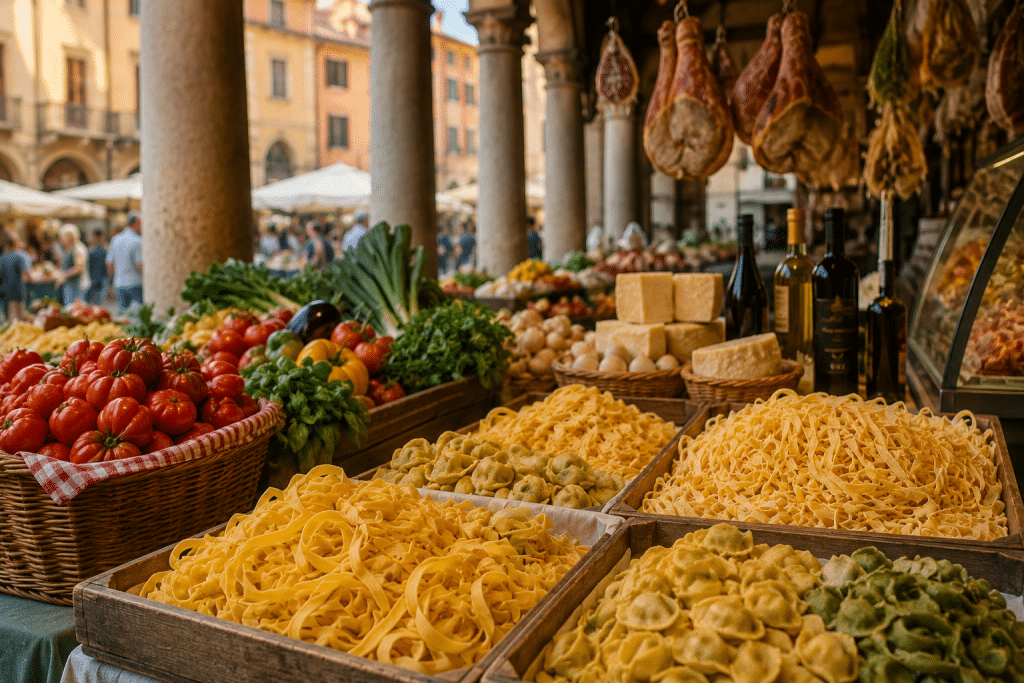
Emilia-Romagna
Undisputed #1 · Italy's Food Valley
Emilia-Romagna sits at the top of our dataset by a clear margin. No other Italian region comes close to its combination of DOP and IGP product density, restaurant infrastructure, food market culture and globally recognisable Italian products.
Why it wins: Parmigiano-Reggiano, Prosciutto di Parma, Aceto Balsamico Tradizionale di Modena, Mortadella di Bologna, Culatello di Zibello, tagliatelle al ragù, tortellini in brodo and Lambrusco all belong to the same food landscape.
Best towns: Bologna, Modena, Parma, Reggio Emilia, Ferrara.
Highlights
- Fresh pasta
- DOP density
- Food Valley
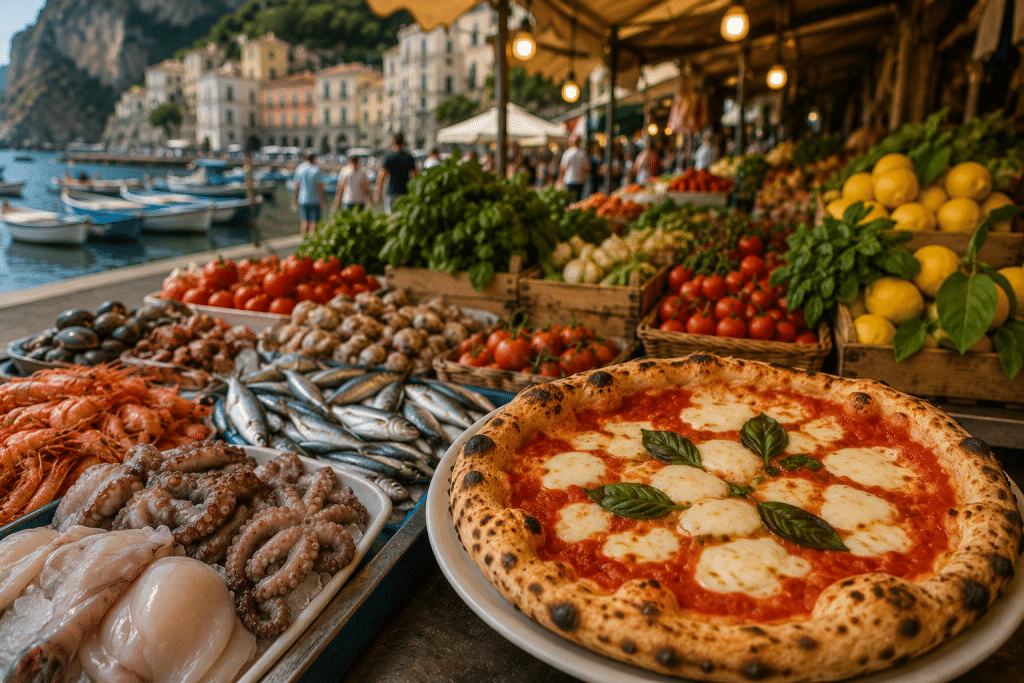
Campania
Pizza · Seafood · Street Food · Exceptional Value
Campania did not invent Italian food. It invented the idea of food as a civic religion. Pizza, mozzarella di bufala, San Marzano tomatoes, lemons, seafood and market eating create one of Italy’s most immediate and emotional food cultures.
Best for: pizza, seafood, street food, buffalo mozzarella, coastal produce and the strongest dining value in the ranking.
Highlights
- Pizza culture
- Coastal produce
- Best value
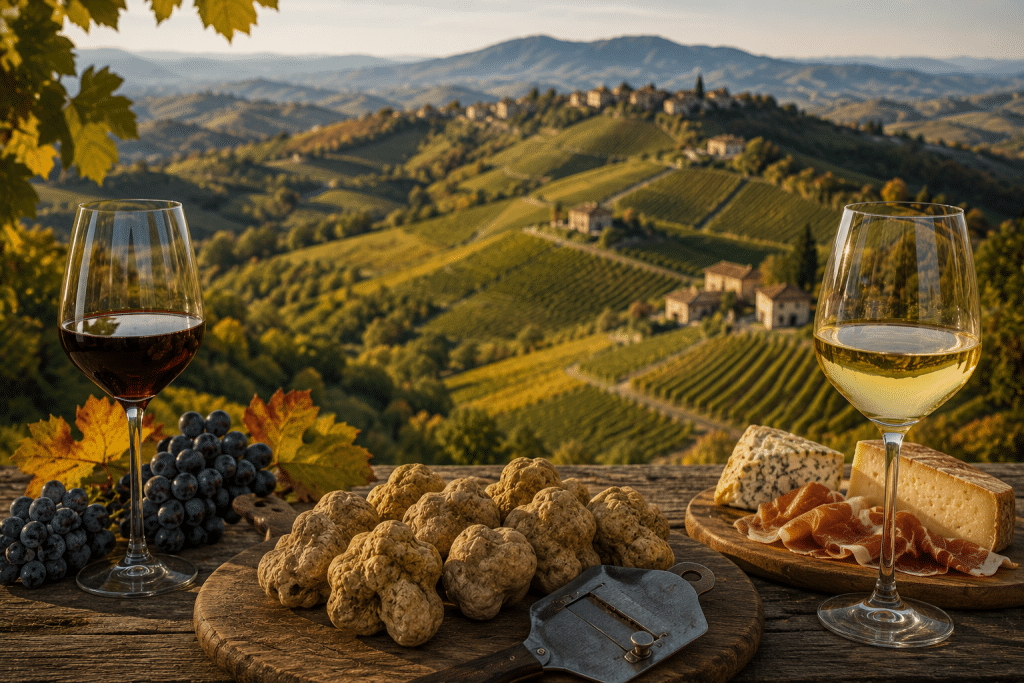
Piedmont
Home of Slow Food · Premium Dining
Piedmont is where Italian food became a conscious philosophy. The Langhe hills around Alba, the wine villages around Barolo and the urban elegance of Turin make this the strongest region for serious seasonal dining.
Best for: white truffles, Barolo, Barbaresco, tajarin, agnolotti del plin, bagna cauda, vitello tonnato and refined autumn food culture.
Highlights
- White truffles
- Barolo country
- Slow Food
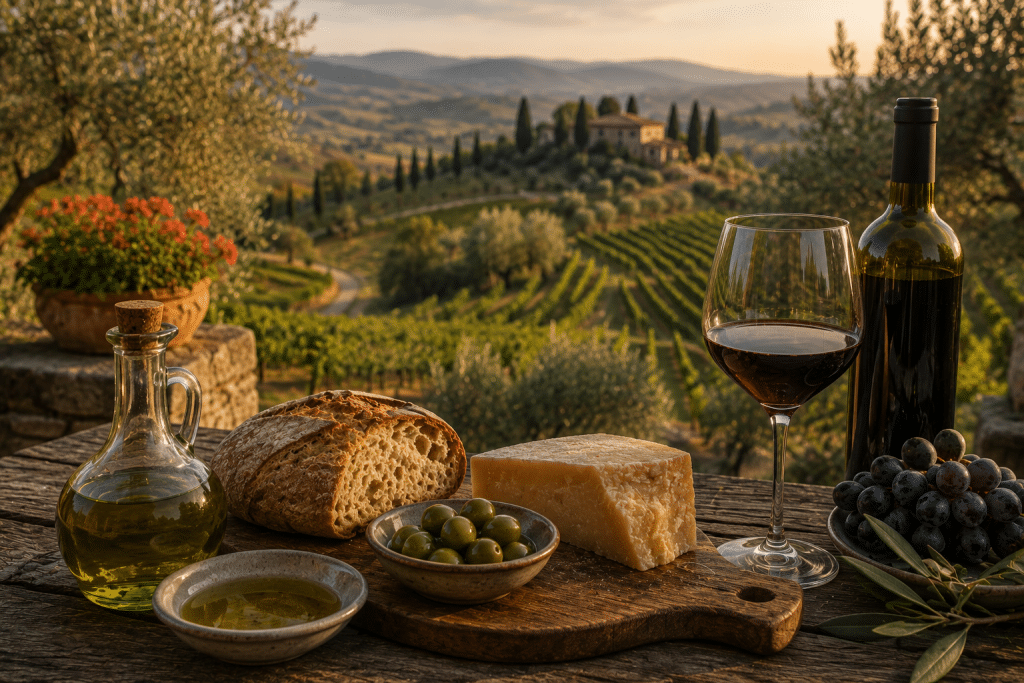
Tuscany
Classic · Iconic · Internationally Recognised
Tuscany is the region the world thinks of when it imagines Italian food. The food is genuinely excellent, but serious food seekers need to navigate the gap between tourist Tuscany and resident Tuscany.
Best for: bistecca alla Fiorentina, ribollita, pappardelle al cinghiale, Chianti Classico, Brunello di Montalcino, pecorino and agriturismo dining.
Best towns: Florence, Siena, Lucca, Montalcino, Montepulciano.
Highlights
- Wine country
- Agriturismo
- High livability
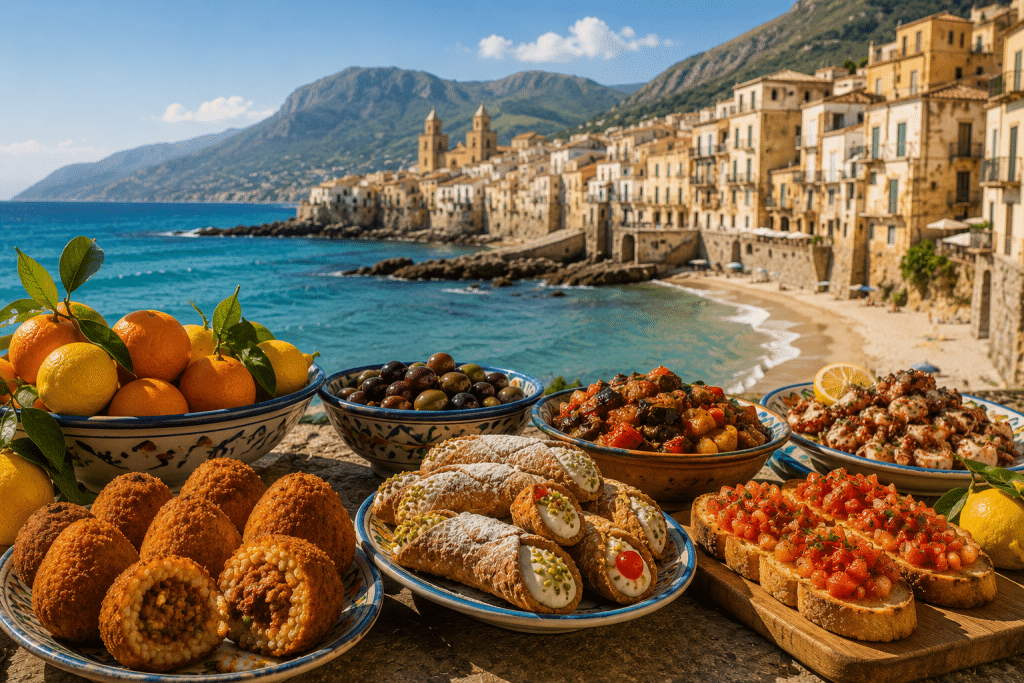
Sicily
Arab-Greek-Spanish Fusion · Best Coastal Value
Sicily’s food culture is the most historically layered of any Italian region — shaped by Arab, Greek, Spanish and Mediterranean influences into a cuisine unlike anything else in Italy.
Best for: Palermo street food, arancini, pasta alla Norma, caponata, cannoli, Modica chocolate, Etna wines and exceptional coastal value.
Highlights
- Street food
- Etna wine
- Coastal value
Side by side
Which Food Region Fits Which Lifestyle?
For the serious traditionalist
Choose Emilia-Romagna if you want protected products, pasta culture, markets and food heritage embedded into ordinary daily life.
For value and intensity
Choose Campania if you want pizza, seafood, street food, strong produce and a food culture that feels immediate and public.
For wine and fine dining
Choose Piedmont if you want truffles, Barolo, autumn rituals, refined dining and strong city-country balance.
For the classic dream
Choose Tuscany if you want wine landscapes, olive oil, farmhouse meals, international services and high long-term livability.
For street food and coastal value
Choose Sicily if you want layered Mediterranean cooking, markets, Etna wines and a lower-cost coastal lifestyle.
Still choosing?
Use the Town Explorer to compare specific towns by cost, food culture, healthcare, transport and year-round practicality.
Food-focused relocation
Your Questions
Which Italian region has the best food overall?
Based on our full dataset analysis, Emilia-Romagna scores highest overall, with the strongest concentration of protected products, quality restaurant infrastructure and everyday food affordability.
Is it better to relocate to Emilia-Romagna or Tuscany for food?
For serious food lovers, Emilia-Romagna usually wins. The food culture is deeper, more accessible and more embedded in daily life. Tuscany has the advantage in international services, property appeal and agriturismo dining.
Which region offers the best food value for money?
Campania has the highest dining value score in our dataset, reflecting an extraordinary cost-to-quality ratio across pizza, seafood, mozzarella, produce and everyday trattoria dining.
Can I live in Italy as a food lover on a retirement budget?
Yes. The Cilento coast, much of Sicily and smaller towns in Emilia-Romagna can offer exceptional food cultures at relatively modest living costs.
How important is Italian language for accessing the real food culture?
Very important. The best , family-run osterie, farmers’ markets and producer relationships become much easier to access when you can speak even practical everyday Italian.
Go deeper
Related Region Guides
Read our comprehensive expat guides for each of the top food regions — covering housing, costs, healthcare, transport and the full relocation picture.
Living in Emilia-Romagna
Bologna, Modena, Parma — costs, housing, healthcare and the full expat guide to Italy’s food capital.
Living in Campania
Naples, the Amalfi Coast and the Cilento — the world’s great food region as a place to actually live.
Living in Piedmont
Turin, Alba and the Langhe — the home of Barolo, white truffles and the Slow Food movement.
Living in Tuscany
Florence, Siena, Chianti and beyond — Italy’s most internationally recognised food and wine region.
Living in Sicily
Palermo, Catania and Etna wine country — the most historically layered cuisine in Italy.
Browse All Region Guides
Compare practical relocation guides for every Italian region.
Ready to make the move?
Find Your Perfect Italian Food Region
Use our free tools to compare towns across all 20 Italian regions — filtering by food culture, cost of living, healthcare and lifestyle factors.